
LANAP Recovery Timeline: What to Expect Day by Day
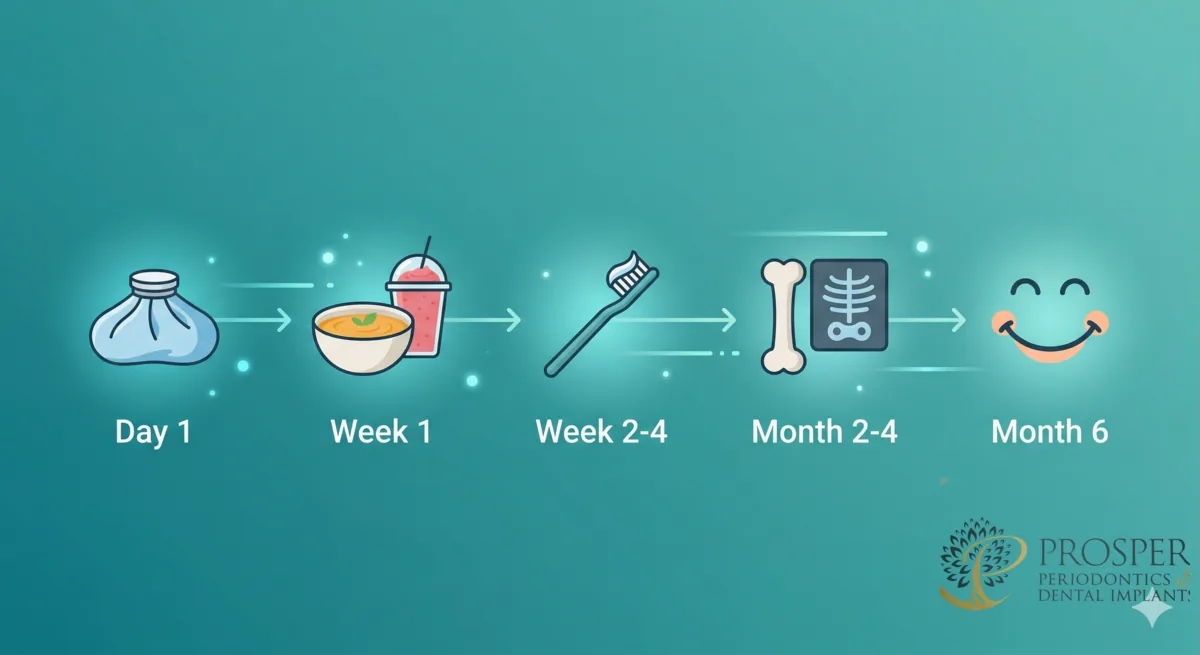
How Long Does It Take to Recover from LANAP?
Most patients return to normal activities within 24 hours after LANAP laser gum treatment. Unlike traditional gum surgery, which requires 2 to 4 weeks of recovery, LANAP recovery is significantly faster because there are no incisions or sutures. However, complete tissue healing and bone regeneration continue for several months.
Day 1: Immediately After LANAP Treatment
You may experience mild soreness and slight swelling, but most patients report minimal discomfort. The local anesthesia will wear off within 2 to 3 hours. Over-the-counter ibuprofen is usually sufficient for any discomfort. Avoid eating for 2 hours, then stick to soft, cool foods like yogurt, smoothies, and mashed potatoes.
Days 2–3: The First 72 Hours
Most patients feel well enough to return to work and regular activities by day 2. Some tenderness when chewing is normal. Continue with soft foods and avoid anything hot, spicy, crunchy, or hard. Do not brush or floss the treated areas — the laser-formed blood clot needs to remain undisturbed for proper healing.
Days 4–7: The First Week
Swelling and tenderness should be resolving by this point. You can gradually introduce slightly firmer foods, but continue to avoid hard or crunchy items. Your periodontist may provide a special antimicrobial rinse. Begin gentle brushing around (but not directly on) the treated areas.
Weeks 2–4: Tissue Healing Phase
The gum tissue is actively reattaching to the tooth roots during this period. You should be eating normally by week 2, though extremely hard foods should still be avoided. Resume normal brushing and flossing as directed by your periodontist. A follow-up appointment is typically scheduled during this window.
Months 2–6: Bone Regeneration Phase
True bone regeneration is occurring beneath the gumline. This is the process that makes LANAP unique — the PerioLase MVP-7 laser stimulates stem cells that facilitate new bone growth. X-rays taken at 6 months often show measurable bone fill in previously deficient areas. According to research in the International Journal of Periodontics & Restorative Dentistry, this regeneration includes both new bone and new connective tissue attachment.
Long-Term: Maintaining Your Results
LANAP results can last many years with proper maintenance. Regular periodontal maintenance visits every 3 to 4 months are essential. Good daily oral hygiene — brushing twice daily and flossing — protects your investment. Patients who smoke should quit, as smoking significantly impairs healing and increases the risk of recurrence.
LANAP Recovery Tips from Dr. Parachuru
- Take ibuprofen before the anesthesia wears off to stay ahead of any discomfort
- Sleep with your head slightly elevated for the first 2 nights
- Avoid straws for the first week — the suction can dislodge the healing clot
- Do not smoke for at least 2 weeks (ideally quit permanently)
- Follow the home care instructions provided at your appointment
Have questions about your recovery? Call (972) 787-1122 or schedule a consultation at Prosper Periodontics in Prosper, TX.
What Happens to Pocket Depths During LANAP Recovery?
One of the most measurable outcomes of LANAP treatment is the reduction in periodontal pocket depth — and it happens progressively over the recovery period. Before treatment, moderate to advanced periodontitis typically produces pocket depths of 5mm to 9mm or more. These deep pockets harbor the bacteria that destroy bone and connective tissue.
Clinical data consistently shows a reduction of 2mm to 4mm in treated pockets by the 6-month mark. A landmark study by Yukna et al. published in the Journal of Periodontology documented exactly this kind of measurable improvement, along with histological evidence of new cementum, new alveolar bone, and new periodontal ligament forming in treated sites.
Clinical Evidence
Histologic evidence of new cementum, new alveolar bone, and new periodontal ligament formation following LANAP treatment with the PerioLase MVP-7 laser — Journal of Periodontology (Yukna RA, Carr RL, Evans GH, 2007)
What this means practically: the pockets that once measured 7mm may measure 4mm at your 6-month re-evaluation. Pockets at 4mm or less are far easier to clean at home and far less likely to harbor the bacteria that caused your disease in the first place. Your hygienist will re-probe all treated sites at that appointment to document your results.
What Happens During Months 3 to 6 of LANAP Recovery?
Months 3 through 6 represent the most active phase of regeneration — even though you will not feel it happening. The PerioLase MVP-7 laser’s specific wavelength and variable pulse duration selectively targets diseased tissue and stimulates the periodontal ligament stem cells that rebuild lost structures.
What Is Being Built During This Phase?
- New bone: Radiographic evidence of bone fill in previously deficient areas is often visible at the 6-month X-ray
- New cementum: The layer of mineralized tissue that anchors the periodontal ligament to the root surface
- New connective tissue attachment: The fibers that physically connect your gum tissue to the tooth root
This is the regenerative outcome that separates LANAP from every other gum disease treatment. Traditional osseous surgery reduces pockets by removing and repositioning tissue. LANAP rebuilds what was lost.
What You May Notice at Months 3 to 6
Most patients notice their gums looking and feeling healthier. Bleeding on brushing diminishes or stops entirely. Sensitivity that was present before treatment often improves as the attachment level stabilizes. Some patients experience mild tooth sensitivity during this phase as the roots become more exposed due to reduced gum inflammation — this is normal and typically resolves.
Expert Insight
“By month 6, we take a full set of X-rays and re-probe every treated pocket. For most patients, we can show them side-by-side radiographs where you can actually see new bone filling in. That is a powerful moment — watching someone realize their body rebuilt what they thought was gone for good.”
— Dr. Parachuru, Periodontist
What Does Long-Term LANAP Success Look Like?
LANAP delivers durable results, but long-term success depends on a combination of what happened in surgery and what you do afterward. Published studies track LANAP outcomes over 5-year periods, and the data is encouraging for patients who follow through with their maintenance protocol.
Success Metrics at 1 Year
- Pocket depth reduction maintained at 2mm to 4mm below baseline
- No increase in tooth mobility (often improvement)
- Radiographic bone fill in previously deficient sites
- Bleeding on probing at or below 10 percent of sites
Success Metrics at 3 to 5 Years
- Tooth retention rate above 95 percent in compliant patients
- Stable pocket depths at re-evaluation appointments
- Continued bone maintenance on X-ray
The 12 to 18 month mark is considered the full biological endpoint of LANAP regeneration. Bone that forms during the first 6 months continues to mature and mineralize through 18 months. This is why LANAP patients are typically evaluated with X-rays at 6 months, 12 months, and annually thereafter.
When Should You Be Reassessed After LANAP?
Re-evaluation timing is built into the LANAP protocol and is not optional — it is how your periodontist confirms the treatment worked and catches any areas that may need additional attention.
| Timepoint | What Happens |
|---|---|
| 2 to 4 weeks | Tissue healing check, home care review, diet advancement |
| 3 months | First periodontal maintenance, clinical assessment |
| 6 months | Full re-probing, X-rays, bone regeneration assessment |
| 12 months | Annual evaluation, updated radiographs |
| Ongoing | Periodontal maintenance every 3 to 4 months |
If pocket depths are not improving adequately at the 6-month re-evaluation, your periodontist may recommend additional laser treatment, adjunctive antibiotic therapy, or in rare cases, a targeted surgical approach to specific sites. Most patients do not need retreatment.
How Does Lifestyle Affect LANAP Healing?
LANAP creates the biological conditions for healing, but your daily habits determine whether the regeneration reaches its full potential. Several lifestyle factors have a documented impact on outcomes.
Smoking
Smoking is the single largest modifiable risk factor for poor LANAP outcomes. Nicotine constricts blood vessels, reducing the oxygen and nutrient supply to healing tissue. Tobacco-derived compounds also impair the stem cell activity that drives bone regeneration. Patients who smoke during recovery see significantly less pocket reduction and bone fill than non-smokers. If you cannot quit permanently, stopping for at least 4 to 6 weeks before and after treatment substantially improves results.
Blood Sugar Control
For patients with diabetes, HbA1c levels directly affect healing speed and quality. Well-controlled diabetes (HbA1c below 7 percent) produces healing outcomes comparable to non-diabetic patients. Poorly controlled blood sugar impairs immune function and delays tissue reattachment. LANAP is particularly well-suited for diabetic patients because the minimally invasive approach reduces surgical stress on the body, but tight glycemic control before and after treatment is still essential.
Nutrition
Adequate protein intake supports the collagen synthesis needed for new connective tissue attachment. Vitamin C plays a direct role in collagen production and is often depleted in periodontal disease patients. Calcium and vitamin D support bone mineralization during the regeneration phase. You do not need supplements beyond a standard multivitamin, but a balanced diet with adequate protein (at least 60g daily) during the first 3 months supports faster healing.
Stress and Sleep
Chronic stress elevates cortisol, which suppresses immune function and inflammatory resolution. Poor sleep has a similar effect. Both are associated with slower wound healing in the research literature. While these factors are not always in your control, managing stress during the critical first 6 weeks after LANAP treatment gives your body the best environment for regeneration.
Can LANAP Results Be Seen Without Returning for Gum Surgery?
For the vast majority of LANAP patients who complete treatment and maintain their 3 to 4 month recall schedule, re-treatment or traditional surgery is not needed. The periodontal maintenance appointments that follow LANAP are not the same as a standard cleaning — they are therapeutic. Your hygienist works in the pockets that were treated, disrupting bacterial colonies before they can re-establish the biofilms that cause disease.
Patients who miss maintenance appointments or return to once-yearly cleanings are at significantly higher risk of recurrence. Gum disease is a chronic condition managed in remission, not cured. The difference between a patient who maintains their LANAP results for 10 years and one who needs retreatment at 3 years usually comes down to maintenance compliance.
Learn more about how LANAP laser gum treatment works, or read about ongoing periodontal maintenance at Prosper Periodontics. If you have questions about whether gum disease can be addressed without surgery, see our post on reversing gum disease. Patients experiencing gum recession alongside periodontitis may need an additional evaluation to determine whether grafting is appropriate after LANAP healing is complete.
Questions about your recovery? Call (972) 787-1122 or schedule a follow-up consultation at Prosper Periodontics in Prosper, TX.
Related Resources
Learn more about the services and topics discussed in this article:
- LANAP laser gum treatment
- sedation dentistry options
- LANAP vs traditional gum surgery
- dental implant recovery
Serving Prosper, TX and Surrounding Communities
Prosper Periodontics and Dental Implants proudly serves patients across North Dallas, including: laser gum treatment in Celina, TX. Schedule your appointment today.