All-on-4 Candidacy: Age, Bone Loss, and Health Factors That Matter

The most frustrating answer a patient can receive from a dental provider is “you are not a candidate” without any explanation of what that means or whether it is permanent. All-on-4 candidacy is more nuanced than yes or no. It depends on bone, age, gum health, and systemic factors that interact in different ways for different patients. This guide walks through the actual evaluation criteria periodontists use, explains where common assumptions fall apart, and clarifies what to do if you have been told elsewhere that implants are off the table. Dr. Praveen Parachuru evaluates All-on-4 candidates at Prosper Periodontics with a workup grounded in 3D imaging and a detailed periodontal exam, not a quick visual look.
Who Is an Ideal Candidate for All-on-4?
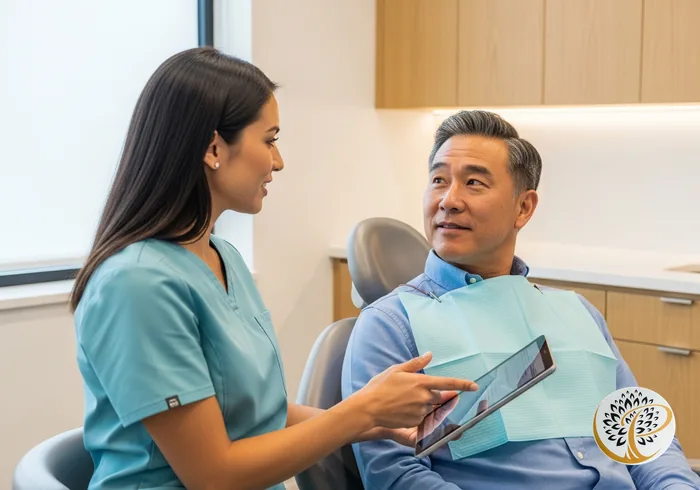
The ideal All-on-4 candidate is an adult who has lost or is losing all the teeth in an arch, has adequate bone in the front of the jaw, has controlled systemic health, and is committed to the maintenance protocol that protects the long-term investment. That description fits a much larger population than most patients realize, including many who have been told they do not qualify.
Adults of nearly any age past skeletal maturity can be candidates. The youngest All-on-4 patients are typically in their late 30s or 40s, often after years of failed root canals, advanced periodontal disease, or trauma. The oldest patients are well into their 80s, with health permitting. Age itself is not a disqualifier. Biological factors matter more than the number on a driver’s license.
Bone is the most commonly cited concern. Because the All-on-4 protocol angles the posterior implants forward, it can succeed in patients with significant posterior bone loss who would not be candidates for traditional vertical implant placement. Some bone in the front of the jaw is still required, and the 3D CBCT scan determines this conclusively. The threshold is not as high as patients fear.
Periodontal status matters because active gum disease will affect long-term implant survival if not addressed. Patients with unmanaged periodontitis are not immediate candidates, but most can become candidates after the periodontal disease is treated. This is one of the reasons full-arch evaluation belongs with a periodontist rather than a general dentist. Treating the disease and placing the implants is a coordinated process.
Commitment to maintenance is the often-overlooked criterion. All-on-4 implants require professional maintenance visits every six months and conscientious daily home care. Patients who follow this protocol achieve survival rates near the top of the published range. Patients who skip maintenance see substantially higher complication rates. This is a long-term partnership, and the consultation conversation includes a candid discussion of what daily and yearly care looks like.
Is There an Age Limit for All-on-4 Implants?
There is no upper age limit for All-on-4 implants in healthy patients, and the lower limit is reaching skeletal maturity (typically late teens to early twenties). What matters is biological age and systemic health, not chronological age.
Patients in their 70s and 80s are routinely successful All-on-4 candidates. Many of them have worn ill-fitting dentures for years and are seeking to reclaim quality of life that decades of bone loss and denture instability have eroded. For these patients, the consultation conversation focuses heavily on overall health, medications, and the physical and cognitive ability to maintain implant hygiene. Patients who are otherwise healthy and motivated do exceptionally well, often expressing that they wish they had moved forward sooner.
Patients in their 30s and 40s sometimes hesitate to consider All-on-4 because they assume it is “an old person’s procedure.” This is a misconception. The biology of implant integration works the same at 35 as at 75. Patients who lose all their teeth at a younger age, often due to congenital conditions, severe periodontal disease, or trauma, are typically excellent candidates and benefit from decades of stable function ahead of them.
The lower threshold is set by jawbone development. Implants placed in actively growing bone can become buried as surrounding bone continues to develop. Most patients reach skeletal maturity by ages 17 to 21, with some variation. For young patients in this window, careful evaluation including comparison of growth records and CBCT imaging guides the timing decision.
What does affect candidacy across all ages is medication and systemic disease. Bisphosphonates for osteoporosis, certain immunosuppressants, and active radiation therapy to the head and neck require careful evaluation. None are absolute disqualifications in every case, but each adds complexity that the consultation conversation will address directly.
How Much Bone Loss Disqualifies You from All-on-4?
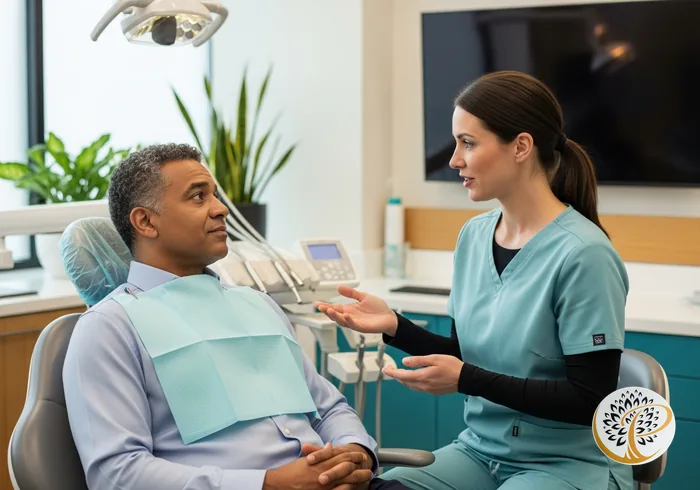
Significant bone loss is one of the main reasons All-on-4 was developed, and most patients with moderate to even severe posterior bone loss are still candidates. This is the area where second opinions matter most, because patients are routinely told elsewhere that implants are off the table when an All-on-4 specialist would assess them as candidates.
The All-on-4 protocol angles the two posterior implants at 30 to 45 degrees, which lets them engage denser bone in the front and middle of the jaw and bypass the maxillary sinus on top or the inferior alveolar nerve canal on the bottom. This design specifically targets the bone-loss patterns that disqualify patients from traditional vertical implant placement. In other words, the patients who were told they need a sinus lift or extensive grafting before implants are often the patients best served by the All-on-4 design.
The minimum bone requirement is in the front of the jaw, where the two front implants are placed vertically. The 3D CBCT scan measures available bone height and width at these sites. Most patients meet the threshold even after years of denture wear, because the front of the jaw resorbs more slowly than the back. Cases that fall short of the threshold can sometimes be addressed with limited grafting, with zygomatic implants in the upper jaw (a specialized protocol that anchors implants in the cheekbone), or with a referral to a specialized full-arch surgical center.
Patients who have been told “you do not have enough bone for implants” should understand that the statement may be technically accurate for the specific protocol the previous provider had in mind. It is not necessarily true for All-on-4. A 3D scan reviewed by a periodontist trained in the angled-implant approach often produces a different answer.
Bone quality also matters, not just bone quantity. The CBCT scan measures bone density at each proposed implant site. Denser cortical bone provides better primary stability for the implants and supports the same-day temporary prosthesis. Softer bone may require slightly different implant selection or, in rare cases, a longer healing window before loading. These nuances are why the consultation visit includes detailed imaging review rather than a quick visual exam.
Does Periodontal Disease Affect Candidacy?
Active periodontal disease must be addressed before or during All-on-4 placement, but a history of periodontal disease does not disqualify you. This is one of the most common candidacy questions, and the answer is more nuanced than most patients expect.
The vast majority of patients who reach the point of considering All-on-4 have a history of periodontal disease. That history is often what brought them here. Teeth lost to periodontitis, gum recession, and bone loss accumulate over years, and full-arch replacement becomes the path forward when individual restorations no longer make sense. A periodontal history is the norm in this population, not the exception.
What matters clinically is whether the disease is currently active. Inflammation, infection, and bleeding gums at the time of implant placement raise the risk of peri-implantitis (infection around the implant) and reduce long-term success rates. Treatment of active disease before or alongside implant placement is essential. For patients transitioning from failing natural teeth to All-on-4, Dr. Parachuru typically extracts all remaining teeth at the surgical visit and addresses any infection sites at the same time. The implants are placed into clean, healthy bone, and the prosthesis attaches to a foundation that is set up for long-term success.
History of periodontal disease does affect maintenance recommendations going forward. Patients with a history of moderate to severe periodontitis are at slightly higher risk of peri-implantitis throughout their lives, even after successful implant placement. This raises the importance of consistent six-month maintenance visits and conscientious home care. It also raises the value of receiving treatment from a periodontist rather than a general dentist, because peri-implant tissue management is the periodontist’s clinical specialty.
Patients with a history of aggressive or refractory periodontitis warrant additional evaluation. These cases sometimes involve underlying immune or genetic factors that affect both the natural teeth and the implants. Dr. Parachuru’s PhD in Immunology brings a useful lens to these conversations because he can discuss the host-response factors that drive disease progression in plain language.
What Health Conditions Affect All-on-4 Candidacy?
Several systemic conditions affect All-on-4 candidacy, but most are management questions rather than absolute exclusions. The conversation matters more than a one-line answer.
Diabetes is the most studied systemic factor. Patients with well-controlled type 2 diabetes (HbA1c below approximately 7.0 to 7.5 percent) achieve implant success rates comparable to non-diabetic patients in most studies. Patients with poorly controlled diabetes face higher rates of impaired healing, peri-implantitis, and implant failure. The path forward for these patients is medical optimization first, then implant placement once metabolic control is in range. Dr. Parachuru coordinates with primary care physicians and endocrinologists when needed.
Active smoking is the single most modifiable risk factor that reduces implant success. Smokers face failure rates two to three times higher than non-smokers due to restricted blood flow, impaired osseointegration, and elevated peri-implantitis risk. This does not categorically disqualify smokers, but it does change the risk conversation. Patients who commit to quitting before placement and maintain cessation afterward achieve outcomes approaching those of non-smokers. Patients who continue smoking should have a frank discussion of risk with their periodontist before proceeding.
Bisphosphonates and other antiresorptive medications prescribed for osteoporosis or metastatic cancer require careful evaluation due to the rare risk of medication-related osteonecrosis of the jaw. Most oral bisphosphonate users at low doses can proceed with implant placement after appropriate medical coordination. Patients on IV bisphosphonates or denosumab for cancer-related indications require more extensive evaluation. None of this is automatic disqualification; it is a careful conversation with risk stratification.
Active head and neck radiation therapy is one of the few situations where implant placement is typically deferred. Patients who have completed radiation in the past can still be candidates, with timing and dose factored into the evaluation. Active chemotherapy is a temporary contraindication; treatment can typically resume after the chemotherapy course is complete and the patient has recovered.
Cardiovascular conditions, controlled hypertension, and most autoimmune conditions are not categorical exclusions. They are factors in the overall medical workup. Pregnancy is a temporary deferral; All-on-4 is not placed during pregnancy and is typically resumed after delivery and recovery. For patients weighing whether implants are worth the investment given their specific health picture, our broader are dental implants worth it guide covers the value calculation in detail.
What Should You Do If You Have Been Told You Are Not a Candidate?
Get a second opinion from a periodontist who specializes in full-arch implant cases, ideally one who places All-on-4 cases regularly and uses 3D imaging for every evaluation. A surprising number of patients who have been told no by one provider are full candidates with a different evaluation.
The most common reason for a “no” elsewhere is that the previous provider was thinking about traditional vertical implant placement, which has stricter bone requirements than the angled-implant All-on-4 approach. Another common reason is that the evaluation was based on a panoramic X-ray rather than a 3D CBCT scan. A panoramic X-ray flattens the jaw into two dimensions and cannot accurately measure available bone width, density, or the precise position of nerves and sinuses. A CBCT scan is the standard of care for any modern implant evaluation.
Some patients have been told no based on age, periodontal history, or a chronic systemic condition. As covered in the sections above, these factors warrant careful evaluation but rarely disqualify outright. A second opinion from a periodontist with full-arch experience often opens options that were not on the table previously.
Bring previous imaging and medical records to the second consultation if you have them. The new evaluation will include its own CBCT scan, but historical records help build the full picture. Be prepared to answer detailed questions about medications, medical conditions, smoking history, and what your previous provider said about candidacy. The more complete the information, the better the recommendation. Patients in Prosper, Frisco, McKinney, Celina, and Aubrey can request consultations directly with our office, and we coordinate referrals to other specialists when a case truly falls outside what we can offer locally.
Ready to Restore Your Smile?
If you have been wondering whether All-on-4 is right for you, or if you have been told elsewhere that implants are not an option, the next step is a real evaluation: a 3D CBCT scan, a periodontal exam, and a candid conversation about your specific bone, bite, and health picture. Dr. Parachuru’s combined background in periodontics and immunology means All-on-4 candidates at Prosper Periodontics are evaluated with full attention to both surgical mechanics and the underlying tissue biology that drives long-term success. We see patients from across North Texas at our office at 2300 E Prosper Trail Suite #20.
To schedule a consultation, call (972) 787-1122 or request an appointment online. Learn more about our protocol and what patients experience on the All-on-4 service page. The most important thing you can do is start the conversation. Bone loss is progressive, and the longer you wait, the fewer options remain on the table.