
Receding Gums Treatment Options: A Periodontist’s Guide

Patients who notice their teeth looking longer often arrive in our office assuming the only fix is surgery. That is sometimes true, but more often there is a ladder of treatment options that runs from very simple at-home changes through composite bonding and orthodontic correction up to surgical grafting for the most severe cases. The right starting point depends on how far the recession has progressed, what is causing it, whether sensitivity is the main complaint, and how much the appearance of the gumline matters to you. This guide walks through the full ladder so you can have an informed conversation with a periodontist about which step is appropriate for your situation. Dr. Praveen Parachuru evaluates and treats gum recession at Prosper Periodontics for patients across the North Dallas area.
What Actually Causes Gums to Recede in the First Place?
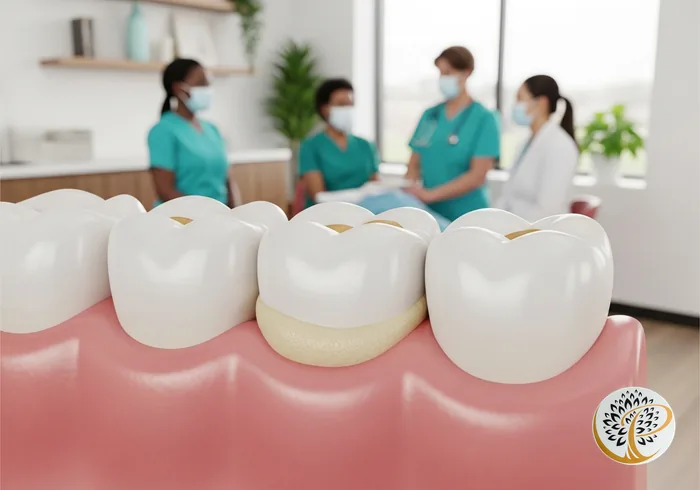
Gum recession is multifactorial, with the most common drivers being aggressive brushing technique, periodontitis, orthodontic tooth movement past the boundaries of the bone, bruxism (clenching and grinding), and underlying anatomical features such as a thin biotype of gum tissue.
Aggressive brushing is the most common cause in patients with otherwise healthy mouths. The combination of a hard or medium-bristled toothbrush, a back-and-forth scrubbing motion, and excessive pressure mechanically wears down the thin gum tissue at the cervical (neck) area of the tooth. Patients often have the cleanest teeth in the office but the most recession. The fix is technique change rather than additional cleaning.
Periodontitis causes recession through a different mechanism. The bacterial infection breaks down the attachment between gum and tooth and causes bone loss, and as the bone recedes the gum tissue follows. This pattern of recession is usually accompanied by other periodontal signs including bleeding, deeper pockets, and sometimes mobility. Treatment in these cases must address the underlying disease before any cosmetic correction is meaningful.
Orthodontic history matters because moving teeth too far buccally (toward the cheek) or lingually (toward the tongue) can push the root past its supporting bone and predispose the area to recession over the years that follow. Bruxism, particularly nocturnal grinding, applies repeated lateral forces that flex the cervical area of the tooth and contribute to a specific type of recession often paired with non-carious cervical lesions (worn notches at the gumline). Anatomical thin biotype, where the gum tissue is naturally thin and translucent, is a structural risk factor that does not cause recession by itself but makes other causes more damaging.
Identifying the cause is the foundation of treatment. Choosing a treatment without addressing the cause produces a result that regresses over time.
When Is Desensitizing Toothpaste the Right Starting Point?
Desensitizing toothpaste is appropriate for mild recession of one to two millimeters where sensitivity is the main complaint, the appearance is acceptable to the patient, and there is no active periodontitis underlying the recession.
Sensitivity from exposed root surfaces happens because root cementum and dentin do not have the protective enamel layer that covers the rest of the tooth crown. The dentinal tubules connect directly to the nerve, so cold air, cold drinks, and acidic foods produce the sharp ache that patients describe. Desensitizing toothpaste containing potassium nitrate, stannous fluoride, or arginine works by either calming the nerve signal or physically occluding the tubules.
Studies suggest that consistent twice-daily use over four to six weeks produces meaningful sensitivity reduction in most patients. The toothpaste needs to sit on the affected area rather than just being brushed over briefly, and patients sometimes apply a small amount with a finger directly to the sensitive teeth before bed for additional contact time. Professional in-office treatments such as glass ionomer or fluoride varnish provide additional benefit for patients who do not respond fully to over-the-counter products.
Where toothpaste alone is not enough is when the recession is progressing, the appearance bothers the patient, or there are signs of active periodontitis. In those situations the conversation moves up the ladder. The benefit of starting here when appropriate is that it costs almost nothing and resolves the most common chief complaint (sensitivity) for many patients.
Where Does Composite Bonding Fit in the Treatment Ladder?
Composite bonding involves placing tooth-colored filling material over the exposed root surface to address sensitivity, improve appearance, and protect the dentin, and it is well-suited to moderate recession on visible teeth where the patient wants to avoid surgery.
The procedure is straightforward. The exposed root surface is cleaned, mildly etched, and bonded with a tooth-colored composite resin shaped to blend with the surrounding tooth and gumline. No anesthesia is typically needed because the work happens on enamel and dentin rather than into the tissue. The visit takes thirty to sixty minutes for one or two teeth.
The advantages of bonding are speed, cost, immediate sensitivity relief, and a better cosmetic appearance for patients who are bothered by visibly long teeth. The trade-offs are that bonding does not regenerate the lost gum tissue, the composite can stain or chip over time and requires occasional refurbishment every five to ten years, and bonding alone does not stop further recession from progressing if the underlying cause is not addressed.
Bonding is sometimes the right standalone treatment for patients with stable recession and esthetic concerns. It is sometimes a complementary treatment paired with grafting, where the graft is performed first to restore tissue thickness and the bonding is added later for fine-tuning the gumline appearance. The choice depends on how much recession is present, whether the cause has been controlled, and what outcome the patient wants long-term.
Can Orthodontic Treatment Reduce Existing Recession?
Orthodontic correction can repair recession that was caused by teeth being positioned outside the bony envelope, and properly planned tooth movement back into the alveolar housing has been shown in multiple studies to allow some spontaneous gum tissue rebound, but orthodontics alone is rarely sufficient for established recession defects.
When recession has resulted from teeth being tipped forward in the lower front (a common pattern), repositioning those teeth more upright can place the roots back within the supporting bone and reduce mechanical strain on the gum tissue. Some patients show gradual improvement in recession over the months following orthodontic completion as the tissue reorganizes around the newly positioned tooth.
In other cases orthodontics is best paired with grafting in a planned sequence. The orthodontist and periodontist coordinate so that grafting occurs either before tooth movement (to thicken the tissue prior to active movement) or after stabilization (to cover any residual recession that did not resolve spontaneously). This kind of multidisciplinary planning is more common in adult orthodontics than most patients realize, and the outcomes are noticeably better than treating either condition in isolation.
Patients considering clear aligner therapy or traditional braces who already have visible recession should ask whether a periodontal evaluation is part of the pre-treatment workup. A simple consult before active orthodontics can prevent the disappointing situation of completing a year or two of orthodontic treatment only to discover that recession progressed during the process.
What Is the Pinhole Surgical Technique and When Is It Appropriate?
The Pinhole Surgical Technique (also called the Chao Pinhole Surgical Technique) repositions existing gum tissue over receded roots through a small access point with no incisions and no sutures, and it is appropriate for moderate recession across multiple teeth in patients who have adequate existing tissue thickness.
Pinhole works by creating a small entry point in the gum tissue, releasing the tissue gently from its bony attachment using specialized instruments, and sliding it coronally over the exposed root surfaces. Collagen membrane is sometimes inserted through the same entry point to stabilize the new position. There are no flaps elevated, no sutures placed, and the technique can address multiple adjacent teeth in a single visit.
Recovery from pinhole is generally faster than from traditional grafting. Patients return to most normal activities within forty-eight to seventy-two hours, with mild swelling for two to three days and minimal restrictions beyond avoiding direct contact with the treated area for the first week. The cosmetic result is typically immediate at the recipient site because the patient’s own surface tissue has been repositioned rather than a new graft having to integrate.
Where pinhole is not the right option is in cases with thin gum tissue, severe recession with significant root exposure, or situations where additional tissue thickness needs to be built up rather than just repositioned. Pinhole moves existing tissue. It does not add tissue. Patients with thin biotype who need volume gain are typically better served by a connective tissue graft. Our pinhole versus gum grafting comparison covers the trade-offs in detail when that post is published; for now, the operative summary is that pinhole excels at multi-tooth moderate recession in patients with adequate existing tissue.
When Does Gum Grafting Become the Right Treatment?
Gum grafting is the appropriate treatment for severe recession, recession with thin or insufficient attached gum tissue, recession on key esthetic teeth where complete coverage is the goal, and any case where the patient wants the most predictable long-term outcome supported by the strongest published evidence base.
Connective tissue grafting (the gold standard procedure) involves harvesting a small amount of tissue from the palate and placing it under a partial-thickness flap at the recession site. The published root coverage rates are 85 to 95 percent in well-selected cases, with the majority of patients achieving complete or near-complete coverage. Acellular dermal matrix grafts using donor tissue avoid the palatal donor site and approach similar outcomes for many indications.
The candid trade-off with grafting is that recovery is longer than with the less invasive options. The first week involves dietary restrictions, careful hygiene, and sometimes more discomfort than with pinhole or bonding. The full healing arc takes three to four months. The reward is the most thoroughly studied, most durable result for the appropriate indications. Grafting is also the only option that meaningfully thickens gum tissue, which is protective against future recession in patients with thin biotype.
For patients with active periodontitis underlying the recession, grafting is sequenced after the disease has been brought under control through scaling and root planing or, when indicated, laser therapy or traditional periodontal surgery. Grafting onto an actively diseased site does not yield reliable results, so the periodontal foundation is treated first and the cosmetic correction follows. Our gum grafting recovery guide (when published) and the gum recession service page walk through the procedure in more detail.
How Does a Periodontist Decide Which Option Is Right for You?
The decision is based on the severity of recession, the presence or absence of active periodontitis, the thickness and quality of remaining gum tissue, the cause of the recession, the cosmetic priorities of the patient, and a candid conversation about recovery time and cost.
A typical evaluation at our office begins with a conversation about what brought you in. Sensitivity, appearance, and progression concern are the most common chief complaints, and the priorities among those three change the conversation. Sensitivity-only complaints sometimes resolve with conservative measures. Appearance concerns on visible teeth often justify surgical correction. Progression concern (the patient noticing the recession is getting worse) requires identifying and addressing the cause before any cosmetic step.
The clinical exam measures recession in millimeters at each affected tooth, evaluates the band of attached gum tissue (keratinized tissue width), characterizes the biotype as thick or thin, and probes for any periodontal disease component. Photography documents the starting condition for treatment planning. Our first visit periodontist guide covers what to expect during this evaluation.
The treatment plan that emerges is typically presented as a ladder. Conservative options are reviewed first to confirm they have been considered. Where surgical correction is recommended, the rationale is explained, the alternatives are named, and the expected outcomes and recovery are discussed candidly. Patients leave with enough information to make an informed decision rather than feeling pushed toward the most aggressive option available.
Ready to Restore Your Gum Health?
If your gums have receded and you want to understand which treatment option is appropriate for your specific situation, the next step is an in-person evaluation that includes recession measurement, biotype assessment, photography, and a candid review of all the options on the treatment ladder. Dr. Praveen Parachuru completed his periodontics certificate at the University of Minnesota alongside a PhD in Immunology, which means recession cases at Prosper Periodontics are evaluated by a clinician trained in both the surgical technique and the underlying tissue biology that determines long-term outcomes. We see patients from Prosper, Frisco, McKinney, Celina, and Aubrey at our office at 2300 E Prosper Trail Suite #20.
To schedule a consultation, call (972) 787-1122 or request an appointment online. Learn more on the gum recession and grafting service page, or read about meet our doctor to learn about Dr. Parachuru’s training and approach.