
Same-Day Dental Implants: Are You a Candidate?

What Does “Same-Day Dental Implants” Actually Mean?
The term “same-day dental implants” is used differently by different providers, and the difference matters. Before you decide whether this approach is right for you, it helps to understand exactly what is happening clinically — and what is not.
“Same-day” refers to immediate loading, not immediate osseointegration. Osseointegration — the biological process by which bone grows into and bonds with the titanium implant surface — takes 8 to 16 weeks regardless of when a crown is placed. What varies is whether a temporary tooth is attached to the implant on the day of placement (immediate loading) or whether the implant is left to heal beneath the gum for 3 to 6 months before any crown is attached (delayed loading, the traditional protocol).
In the traditional protocol, the timeline looks like this: tooth extraction or implant placement visit (Day 1), healing period of 3 to 6 months, then a second surgical appointment to uncover the implant if buried, followed by impressions and crown fabrication, and finally crown placement 2 to 4 weeks after that. From start to a functioning tooth, traditional protocol takes 4 to 9 months depending on whether extraction is involved and whether bone grafting is needed.
In the same-day protocol, the timeline compresses dramatically. The implant is placed and, if it achieves sufficient primary stability (a measurable metric discussed below), a temporary tooth is attached to the implant the same day. The patient leaves with a tooth that looks and functions like a natural tooth from day one. After the osseointegration period of 8 to 16 weeks, the temporary crown is replaced with the permanent restoration. Total time to final crown: 2 to 4 months instead of 4 to 9.
The key question is whether immediate loading is clinically safe for you specifically. It is not universally appropriate, and providers who offer it to every patient without rigorous candidacy evaluation are taking risks with outcomes. The candidacy criteria are specific, measurable, and non-negotiable.
Who Qualifies for Same-Day Dental Implants? The Candidacy Criteria
Candidacy for immediate loading depends on a set of biological and biomechanical criteria that can only be assessed at a clinical evaluation. A cone-beam CT (CBCT) scan, periodontal evaluation, and medical history review are all required before a same-day protocol can be confirmed as appropriate.
Primary stability is the most critical factor. Primary stability refers to the mechanical resistance of the implant immediately after placement — essentially, how tightly the implant is gripped by the surrounding bone before any biological bonding has occurred. This is measured using a unit called insertion torque value (ITV), expressed in Newton centimeters (Ncm). Most implant protocols require a minimum ITV of 25 to 35 Ncm for delayed loading. For immediate loading to be safe, the standard is higher — typically 35 to 45 Ncm or greater, depending on the implant system. If the implant achieves high primary stability during placement, same-day loading is biomechanically defensible. If it does not, delayed loading is the safer choice.
Adequate bone volume is the prerequisite for achieving primary stability. Without sufficient bone density and volume at the implant site, primary stability cannot be achieved and immediate loading is not possible. CBCT imaging allows Dr. Parachuru to evaluate bone dimensions in three planes before a single incision is made. If bone volume is borderline, bone grafting at the time of extraction — followed by a healing period — may be recommended before implant placement.
General health requirements for immediate loading mirror those for standard implants, with some additional caution. Patients with well-controlled systemic diseases can often proceed with same-day implants, but the threshold for control is higher because the healing demands of immediate loading are greater. Uncontrolled diabetes, active smoking, immunosuppressive medications, and recent radiation to the jaw are all reasons to consider delayed loading. Bruxism (grinding) is a specific concern for immediate loading because the lateral forces generated during grinding can exceed the tolerances of a newly placed implant, compromising osseointegration.
Aesthetic zone considerations apply specifically to front teeth. Immediate loading in the aesthetic zone (the front 6 to 8 teeth visible when smiling) requires not only the standard primary stability criteria but also careful evaluation of the soft tissue profile, the bone level at the adjacent teeth, and the patient’s smile line. The aesthetic risk of complications — peri-implant tissue recession, crown misalignment, or color mismatch during the healing period — is higher for front-tooth same-day implants. Some periodontists prefer delayed loading for upper front teeth specifically to protect the aesthetic outcome.
How Does the All-on-4 Same-Day Protocol Work?
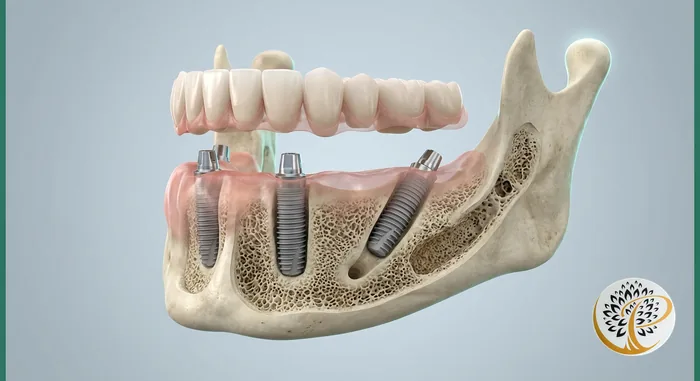
All-on-4 is the most established and research-backed application of the same-day implant concept. Developed and systematically studied by Dr. Paulo Malo starting in the 1990s, the All-on-4 protocol uses four strategically placed implants to support a full-arch fixed restoration that the patient walks out wearing on the day of surgery.
The biomechanical logic of All-on-4 is elegant. Two implants are placed vertically in the front of the arch, where bone is typically denser and more available. Two additional implants are placed at a 45-degree angle in the posterior region, threading through denser bone and emerging at a position that supports the full arch without requiring individual implants at every tooth position. The angled posterior implants allow full-arch restoration even in patients with moderate bone loss in the back of the jaw — one reason All-on-4 often does not require bone grafting that other full-arch approaches would need.
On the day of surgery, here is what happens in the office:
- Pre-surgical imaging and planning: CBCT scans are used to virtually plan the exact position, angle, and depth of each implant. Surgical guides may be fabricated ahead of time for precise execution.
- Sedation and anesthesia: IV sedation or general anesthesia is typically used. Most patients report minimal awareness of the procedure and describe the experience as far less difficult than anticipated.
- Extractions if needed: Remaining teeth are removed in the same visit, eliminating the need for a separate extraction appointment.
- Implant placement: All four implants are placed according to the pre-surgical plan. Insertion torque is measured for each implant to confirm primary stability.
- Immediate provisional bridge: A pre-fabricated or same-day-milled acrylic bridge is attached to the four implants. The patient leaves with a full set of fixed teeth.
The provisional bridge is intentionally less demanding than the final restoration. It is designed to distribute forces evenly across all four implants during osseointegration, avoiding the concentrated stress that could compromise healing. After 3 to 5 months, once osseointegration is confirmed, the provisional is replaced with the permanent full-arch bridge — typically a zirconia or hybrid ceramic restoration designed for strength, aesthetics, and long-term durability. Learn more about our All-on-4 protocol and what to expect at each stage.
What Are the Success Rates for Same-Day Versus Traditional Implant Loading?
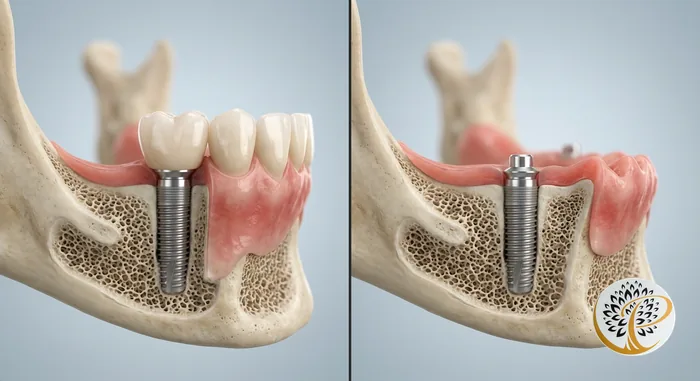
Immediate loading implant success rates are slightly lower than those for delayed loading, and it is important to be transparent about this. The difference is not dramatic, but it is real and should be part of an honest candidacy discussion.
Delayed loading success rates: 95 to 98 percent at 10 years. This is the benchmark established by decades of clinical research across millions of implants placed worldwide. It represents the outcome when implants are allowed to fully osseointegrate before any functional load is applied.
Immediate loading success rates: 90 to 96 percent at 10 years in carefully selected patients. The lower bound applies to cases where candidacy criteria were more borderline or where the aesthetic zone was involved. The upper bound — approaching the delayed loading range — applies to cases with high primary stability, ideal bone conditions, healthy patients, and no bruxism. The research consensus is that in well-selected patients placed by experienced specialists, immediate loading is clinically acceptable and delivers outcomes close to the traditional protocol.
For All-on-4 specifically, a 2022 systematic review covering over 12,000 implants reported a 10-year implant survival rate of 94.8 percent — a strong result for a complex full-arch same-day procedure, and one that has consistently improved as techniques and case selection have matured.
Clinical Evidence
Systematic review of randomized controlled trials comparing immediate and delayed loading protocols found no statistically significant differences in implant failure rates in well-selected patients, though immediate loading in compromised bone requires greater caution. — Clinical Oral Implants Research (Esposito et al., 2013)
The honest summary: same-day implants work very well in the right patient. They require more careful case planning, higher primary stability at placement, and potentially more conservative dietary restrictions during healing. But for qualifying patients, the quality-of-life benefit of leaving with a functioning tooth the same day is substantial, and the evidence supports the safety of this approach in specialist hands.
What Happens During the Single Same-Day Implant Visit?
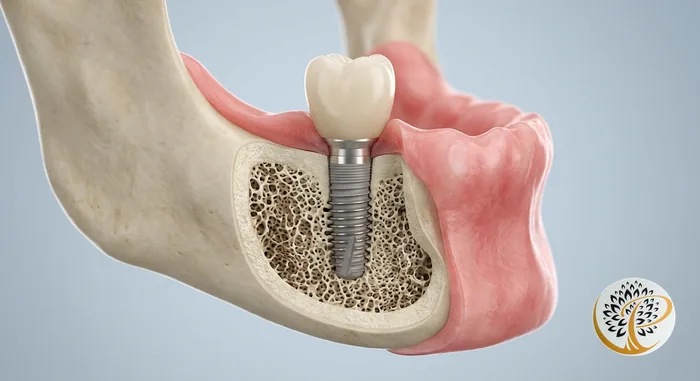
Understanding the sequence of a same-day implant appointment helps patients prepare mentally and logistically. This is a more involved procedure than a standard filling or even a simple extraction, and planning accordingly makes the experience significantly smoother.
Before the appointment: You will have already completed a full examination, CBCT imaging, medical history review, and treatment planning consultation. A surgical guide may have been fabricated based on your CBCT data. You will receive specific pre-operative instructions including fasting guidelines if IV sedation is planned, any pre-medications (such as antibiotics or anti-inflammatory medications), and transportation arrangements (you will not drive home if sedated).
Arrival and preparation (30 to 45 minutes): IV sedation is placed if selected. Local anesthesia is administered to the surgical area. You will be comfortable before any procedure begins.
Surgical phase (60 to 120 minutes depending on number of implants): The implant site is accessed, the implant is placed using the surgical guide if applicable, and the insertion torque value is measured. If the torque exceeds the minimum threshold, the abutment for immediate loading is placed. If it does not reach that threshold, the implant is covered and allowed to heal under the delayed protocol.
Crown or provisional placement (30 to 60 minutes): The temporary or final crown is attached, adjusted for bite, and confirmed for proper seating. You will bite on articulating paper and the crown is adjusted until it meets the opposing teeth correctly. For immediate loading, the goal is minimal contact in eccentric movements to reduce stress during healing.
Recovery and discharge (30 minutes): Post-operative instructions, medications, and a follow-up schedule are provided. Most patients feel minor soreness and swelling for 3 to 5 days, managed well with over-the-counter pain relievers and ice packs. Most same-day implant patients return to desk work within 1 to 3 days.
Expert Insight
“The same-day protocol is not a shortcut -- it is an advanced technique that requires more preparation and more precision than traditional implant placement, not less. When I am placing an implant for immediate loading, I am measuring primary stability in real time, and I am prepared to shift to a delayed protocol if the bone does not give me the numbers I need. The patient's long-term success always takes priority over same-day delivery.”
— Dr. Parachuru, Periodontist
When Is Delayed Loading the Better Choice Than Same-Day?
A provider who recommends same-day implants to every patient is not serving every patient well. There are clear situations where waiting for full osseointegration before loading the implant produces better long-term outcomes.
Low primary stability at placement: This is the clearest indication for delayed loading. If the implant does not achieve the minimum torque values for immediate loading, placing a crown adds stress to an insufficiently stable implant. That stress can disrupt the critical early phase of osseointegration and significantly increase failure risk. Dr. Parachuru measures primary stability intraoperatively and makes the loading decision based on what the data shows, not what was planned beforehand.
Post-extraction sites with bone defects: When a tooth is extracted and the socket has significant bone damage — from infection, fracture, or periodontal disease — immediate loading in that socket carries higher risk. Often, the best approach is extraction plus bone grafting, a 3-to-4-month healing period, implant placement, and then immediate or delayed loading depending on the resulting bone quality.
Aesthetic zone in patients with thin tissue biotype: Patients with thin, delicate gum tissue in the front of the mouth face higher risk of recession around an immediately loaded implant. Recession in this area is not just a biological complication — it is a visible aesthetic one. Delayed loading in thin-biotype aesthetic-zone cases protects the final result.
Active smokers who cannot quit: Nicotine compromises blood flow to healing tissue and significantly increases failure rates for immediate loading. If a patient cannot stop smoking during the healing period, delayed loading is safer — though quitting remains the recommendation for both protocols.
Uncontrolled systemic disease: As noted in the candidacy section, uncontrolled diabetes, immune suppression, and other systemic conditions that impair healing are reasons to use delayed loading or to postpone implant treatment entirely until the condition is better managed. See our related guide on the full range of implant benefits and contraindications for more on systemic health factors.
What Are the Risks and Trade-offs of Same-Day Implants?
Transparency about risks is part of informed consent. Same-day dental implants in appropriate candidates are safe and well-supported by research. They also carry specific risks that delayed loading does not, and patients deserve to understand them before choosing this approach.
Higher early failure rate in non-ideal candidates: The narrowed success margin is real. Patients who are borderline on candidacy criteria and choose immediate loading accept a meaningfully higher failure probability. If the implant fails after immediate loading, the consequences include a failed osseointegration event, the need for removal and a waiting period, potential additional bone grafting, and re-placement — a substantially longer and more expensive journey than starting with delayed loading.
Dietary restrictions during healing are more strict: During the osseointegration period for an immediately loaded implant, the bite forces on the crown must be managed carefully. Patients are typically restricted to a soft diet for 6 to 12 weeks — nothing hard, crunchy, or requiring significant biting force on the implant site. This is the biological reality: the implant is integrating while a functional load is present, and that load must be controlled.
Provisional aesthetics are temporary: The same-day temporary crown is not the final restoration. It is designed for function and protection during healing, not for final aesthetic perfection. Some patients are surprised to learn that the tooth they leave with on surgery day will be replaced with the permanent crown 3 to 5 months later. Planning for this timeline is part of treatment.
To discuss whether same-day dental implants are appropriate for your specific situation, call Prosper Periodontics at (972) 787-1122 or request a consultation. A CBCT scan and clinical evaluation provide the data needed to answer this question definitively for your case. You can also explore our full dental implants overview, bone grafting and preparatory procedures, and Dr. Parachuru’s credentials and approach.
Related Resources
- Dental Implants at Prosper Periodontics – Full procedure overview and candidacy criteria
- All-on-4 Full Arch Implants – Same-day complete arch restoration protocol
- Bone Grafting and Specialized Procedures – Preparatory treatments that expand candidacy
- Are Dental Implants Worth It? – ROI analysis, pros, cons, and real patient scenarios
- Meet Dr. Parachuru – Specialist credentials, PhD Immunology, University of Minnesota training
- Dental Implants for Frisco Patients
- Dental Implants for McKinney Patients
Serving Prosper, Frisco, McKinney, Celina, and surrounding North Texas communities. Prosper Periodontics and Dental Implants is located at 2300 E Prosper Trail Suite #20, Prosper, TX 75078. Call (972) 787-1122 to schedule your consultation. Office hours: Monday through Thursday 8am to 5pm, Friday 8am to 12pm.