
Frenectomy: A Simple Procedure That Makes a Big Difference

A frenectomy is one of the smallest procedures in periodontics, but for the right patient it solves problems that have lingered for years. The frenum is the small band of tissue that connects the lip or tongue to the gums or floor of the mouth, and when one of these bands is too thick, too tight, or attached too close to the teeth, the result can range from a stubborn gap between the front teeth to feeding difficulties in an infant to denture instability in an older adult. The procedure itself takes minutes, recovery is short, and the outcomes are typically permanent. This guide walks through what a frenectomy is, who needs one, the laser-versus-scalpel question, and what recovery looks like. Dr. Praveen Parachuru performs frenectomies at Prosper Periodontics using protocols he refined during his periodontics certificate at the University of Minnesota.
What Is a Frenectomy and What Are the Two Types?
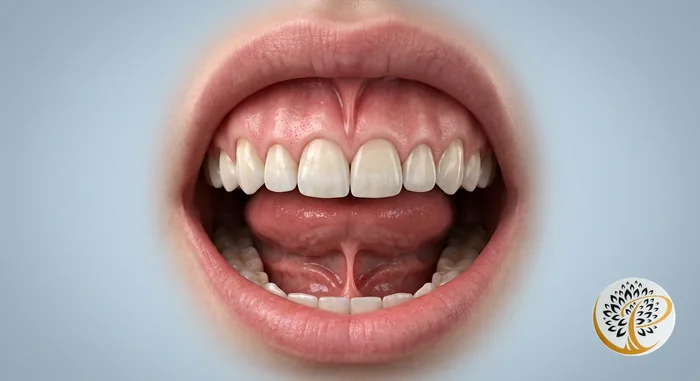
A frenectomy is a minor surgical procedure that releases or removes a frenum, the band of soft tissue that connects the lip, cheek, or tongue to the gums or floor of the mouth. There are two common types based on which frenum is involved: a labial frenectomy and a lingual frenectomy.
The labial frenum is the small band of tissue that runs from the inside of the upper or lower lip down to the gum. Most people have a labial frenum that sits well above the gum line and causes no issues. A labial frenum becomes a problem when it attaches too close to the teeth, pulls on the gum tissue with normal lip movement, or sits between the two front teeth and contributes to a persistent gap (diastema). A labial frenectomy releases this attachment by removing or repositioning the band.
The lingual frenum is the band of tissue under the tongue that connects the underside of the tongue to the floor of the mouth. When this band is too short, too thick, or attached too far forward, the tongue’s range of motion is restricted. The condition is commonly called tongue-tie or ankyloglossia. A lingual frenectomy releases the tongue by cutting through this restrictive band.
Both procedures are typically performed in a single short visit under local anesthesia, with sedation as an option for anxious patients or pediatric cases. Our specialized procedures service page covers the procedure within the broader scope of periodontal services.
What Are the Indications for a Frenectomy in Children?
In children and infants, the most common indication for a frenectomy is a tongue-tie that interferes with breastfeeding, speech development, or oral function. Pediatric frenectomy is increasingly recognized as an important intervention rather than a wait-and-see issue.
In infants, a tongue-tie can prevent the baby from latching effectively during breastfeeding. The signs include difficulty maintaining a latch, prolonged feeding times, poor weight gain, clicking sounds during feeding, and maternal nipple pain or damage. A coordinated evaluation by a lactation consultant and a pediatric-friendly provider often identifies the tongue-tie as the underlying cause. A simple lingual frenectomy in the first weeks or months of life typically allows feeding to improve quickly.
In toddlers and older children, tongue-tie can affect speech development, particularly the production of sounds that require the tongue to reach the upper palate or front teeth. It can also affect oral hygiene, because a restricted tongue cannot sweep food debris off the teeth. A labial frenectomy in children is sometimes recommended when a thick upper labial frenum is causing or maintaining a midline gap that orthodontic treatment cannot close while the frenum remains. Most orthodontists recommend addressing the frenum either before or shortly after orthodontic gap closure to prevent relapse.
The pediatric population deserves a careful provider conversation about timing, technique, and recovery. Frenectomy in children is a quick procedure with a short recovery, but the decision to proceed should always involve a clear indication and a coordinated team that includes the pediatrician, lactation consultant, speech therapist, or orthodontist as appropriate.
What Are the Indications for a Frenectomy in Adults?
In adults, frenectomy is most commonly performed for three reasons: to support orthodontic stability after closing a midline gap, to address gum recession risk where the frenum is pulling on the gum margin, and to improve the fit of removable dentures. Each indication has a clear clinical rationale.
The orthodontic indication is the most familiar. A patient who has just finished closing a diastema (gap between the upper front teeth) with braces or aligners often has the orthodontist recommend a labial frenectomy to remove the frenum that may be exerting pulling force on the closed gap. Without the frenectomy, the gap can re-open over time even with retainer compliance. The procedure is straightforward and is often performed before retainer therapy begins.
The gum recession indication relates to mechanical pulling. When a frenum is attached very close to the gum margin, every smile, lip movement, or chewing action transmits a small mechanical force that can contribute to gum recession over time. In patients with thin biotype gum tissue or progressive recession in a localized area, a frenectomy is often combined with gum grafting to both remove the pulling force and rebuild the lost tissue.
The denture indication is common in older patients. A high frenum attachment can dislodge an upper or lower complete denture every time the patient speaks or smiles, making the denture impossible to keep stable. A frenectomy lowers or removes the attachment so the denture flange can sit comfortably without being pushed off.
A small subset of adult cases involves a previously undiagnosed tongue-tie that has caused chronic neck tension, sleep-related breathing issues, or speech limitations. These cases warrant a coordinated evaluation with a sleep physician, speech therapist, or orofacial myologist before proceeding.
Laser Frenectomy vs Traditional Scalpel: What Is the Difference?
Both laser and scalpel frenectomy techniques are well-established and produce equivalent long-term outcomes, but they differ in intraoperative experience, bleeding, suture requirement, and recovery profile. The choice depends on the specific case and the periodontist’s training and equipment.
A traditional scalpel frenectomy uses fine surgical instruments to release the frenum, which is then sutured. The procedure is fast in skilled hands and produces predictable results. Sutures are typically dissolvable and disappear in 7 to 14 days. Some bleeding during the procedure is normal, and the suture line can be tender for a few days during eating.
A laser frenectomy uses a soft-tissue laser to release the frenum. The laser cauterizes as it cuts, which means very little bleeding during the procedure and typically no need for sutures. Patients often report less post-operative discomfort and a faster return to normal eating. Laser is particularly useful in pediatric cases where suture management would be difficult and in adults who cannot or prefer not to deal with sutures.
Both techniques can be performed under local anesthesia with optional sedation. The laser approach often shortens chair time, particularly in pediatric and anxious-adult cases. Dr. Parachuru selects the technique that fits the case based on the location of the frenum, the patient’s age, and any combined procedures such as gum grafting. The long-term outcome is the same with either approach when performed by a trained provider.
What Does Frenectomy Recovery Look Like?
Frenectomy recovery is among the shortest in periodontics: minor tenderness for 3 to 5 days, a soft-food preference for 2 to 3 days, and full tissue healing over 2 to 3 weeks. Most patients return to work or school the same day or the next day.
The first 24 hours involve the most discomfort, which is generally mild. Over-the-counter ibuprofen or acetaminophen handles most cases. Cold compresses on the outside of the face for the first day reduce any swelling. Mild oozing for a few hours is normal, particularly with scalpel technique. Avoid hot liquids, spicy foods, and acidic foods that can irritate the surgical site.
Days 2 through 5 involve gentle eating and good hygiene. Lukewarm soups, eggs, smoothies, and yogurt are easy. Brushing nearby teeth is fine; the surgical site is rinsed with prescribed antimicrobial rinse or warm salt water rather than brushed. Sutures placed during scalpel technique are typically dissolvable and disappear on their own; non-dissolvable sutures are removed at the 7-to-14 day follow-up.
In pediatric cases, post-operative stretching exercises are sometimes recommended to prevent the frenum from reattaching during healing. Your provider will demonstrate the exercises if they are part of the protocol. By 2 to 3 weeks, the tissue has fully matured, and the patient resumes all normal activities including chewing on the surgical side.
Will Insurance Cover a Frenectomy?
Insurance coverage for frenectomy depends on the indication and the type of plan. Medical insurance often covers frenectomy when there is a documented medical indication, such as breastfeeding difficulty in infants, speech impairment, or gum recession requiring surgical correction. Dental insurance coverage is variable.
For pediatric tongue-tie cases tied to feeding or speech issues, medical insurance is often the primary path because the indication is medical rather than dental. The provider documents the indication with input from the lactation consultant, speech therapist, or pediatrician, and submits the claim with appropriate medical billing codes. Pre-authorization helps clarify coverage before the procedure.
For adult cases tied to orthodontic relapse prevention or gum recession, dental insurance is typically the primary path. Coverage varies by plan and the procedure is sometimes covered at the same rate as a periodontal surgical code. For purely cosmetic cases (a patient who simply wants the frenum removed without a documented functional indication), insurance coverage is unlikely.
Our team handles insurance verification and pre-authorization on every case and provides a written treatment plan with itemized costs before any surgical commitment. Cherry Financing is available for any out-of-pocket portion. The fee for a frenectomy at most periodontal practices is modest compared to other surgical procedures, often in the $300 to $800 range depending on technique and sedation choices.
When Should You Consider a Frenectomy Consultation?
A consultation is worth considering if you or your child have any of the following: a persistent gap between the upper front teeth that is recurring after orthodontics, gum recession in a localized area where a frenum appears tight, a tongue-tie causing speech or feeding issues, or a denture that will not stay in place. Each of these has a specific evaluation pathway.
The orthodontic-relapse case is straightforward. Your orthodontist or general dentist will refer for evaluation, and the periodontist confirms whether the frenum is contributing to the recurring gap. The gum recession case is sometimes self-identified by the patient noticing a band of tissue pulling on the gum line and progressive recession in that area. The tongue-tie case in adults is often discovered after an evaluation with a speech therapist or sleep physician who suspects a structural cause. The denture case is usually identified by the dentist or denturist who is having difficulty fitting the denture.
In all cases, the consultation includes a clinical examination, photographs of the area, and a discussion of whether the frenectomy alone is the right procedure or whether a combined approach with gum grafting, orthodontic coordination, or denture refitting is appropriate. Our first visit guide covers what a thorough specialist consultation looks like.
The decision is rarely urgent, but the procedure is typically simple enough that delaying does not provide a meaningful benefit. If the indication is clear, addressing the frenum sooner often prevents downstream issues like orthodontic relapse or progressive recession.
Ready to Schedule Your Frenectomy Consultation?
If you, your child, or a family member has been told a frenectomy is needed, or if any of the indications above sound familiar, the next step is a periodontal consultation to confirm the diagnosis, discuss laser versus traditional technique, and review insurance coverage. Dr. Parachuru completed his periodontics certificate at the University of Minnesota with a PhD in Immunology, which means frenectomy candidates at Prosper Periodontics are evaluated by a specialist who treats the procedure with the same care given to larger surgeries. We see patients from Prosper, Frisco, McKinney, Celina, and Aubrey at our office at 2300 E Prosper Trail Suite #20.
To schedule, call (972) 787-1122 or request a consultation online. Learn more about our procedural offerings on the specialized procedures service page, explore gum recession and gum grafting, and review our first visit guide for what to expect. Aubrey-area patients can read the periodontal care in Aubrey page.